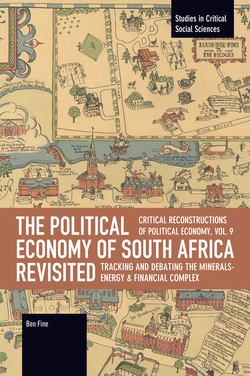
The reasons for South Africa’s full and rapid post-apartheid embrace of neoliberal economic policy remain controversial. Drawing on the author’s own participation in policy debates, this volume shows that alternative paths were either dismissed or never even considered.
Explanations for policy failings have to be sought in determinants such as globalization, financialization, capital flight, corporate restructuring and Black Economic Empowerment. The text offers extensive surveys of relevant literature including the developmental state, industrial and social policy, privatization, trade policy, the Harvard School, comparative experience and the deficiencies in the country’s National Development Plan and New Growth Path.
ISBN: 9798888909102
Publication date: November 24, 2026
Contents
Preface
List of Figures, Tables and Boxes
1 South Africa’s Policy Conundrums
1 The Policies and Policymaking that Never Were
2 The Policies that Could Have Been?
2 Post-Apartheid Economic Transition as Enigma: the Fate of MERG
Postscript as Personal Preamble
1 Introduction
2 Demystifying MERG
3 How Much Did Policy and Policy Making Change?
4 Reflecting on the Transition
3 Revisiting Apartheid Political Economy
Postscript as Personal Preamble
1 Introduction
2 From Disjuncture to Integration but Always Heterogeneity
3 Industrial Policy Is as Industrial Policy Does
4 The Role and Influence of the IMF on Economic Policy in South Africa’s Transition to Democracy: the 1993 CCFF Revisited
Postscript as Personal Preamble
The Loan not Taken – The IMF, Innocent as Accused
5 Context and Contest in South African Education Policy: Comment on Curtin
Postscript as Personal Preamble
1 Introduction
2 Universal Education in South Africa
3 Masterplans and Social Actors
4 User Charges and Education Policy in Transition
5 Human Capital Theory
Appendix
6 “Politics and Economics in ANC Economic Policy”: an Alternative Assessment
Postscript as Personal Preamble
1 Apologetics, Polemics and Scholarship
2 Methodological Considerations
3 Theoretical Doubts
4 Interpretation and Missing Evidence
5 Future Prospects
7 Flexible Production and Flexible Theory: the Case of South Africa
Postscript as Personal Preamble
1 Introduction
2 A Few Theoretical Reconsiderations
3 The South African Economy and the Minerals-Energy Complex
4 Flec-Spec’s Intellectual Origins
5 Concluding Remarks
8 A Sustainable Macroeconomic Growth Path for South Africa?
Postscript as Personal Preamble
1 Introduction
2 The Economy on the Eve of Democratic Elections
3 The Economic Policy of the GNU
4 The Economy between Elections
5 Time for a Re-Think?
6 A Framework for an Alternative Macroeconomic Policy
7 Conclusion
9 Submission to the COSATU Panel of Economists on “The Final Recommendations of the International Panel on Growth” (the Harvard Panel)
Postscript as Personal Preamble
1 Introductory Remarks
2 Policy Initiatives
Appendix
10 Rejoinder to “A Response to Fine’s ‘Harvard Group Shores Up Shoddy Governance’”
Postscript as Personal Preamble
1 Introduction
2 Overlooking Industrial Policy
3 Underplaying Finance, Investment, Employment and Growth
4 Closing Remark
11 Assessing South Africa’s New Growth Path: Framework for Change?
Postscript as Personal Preamble
1 Foreword
2 New Growth Path for Old?
3 From Tradeoffs to Capital Flight
4 Financialisation Meets the MEC
5 Lessons from China …
6 … To Developmental State
7 Twixt Politics and Policies
8 Concluding Remarks
12 Chronicle of a Developmental Transformation Foretold: South Africa’s National Development Plan in Hindsight
Postscript as Personal Preamble
1 Introduction
2 From the Camel’s Back to the Elephant in the Room
3 Twenty Years of Insolitude
4 From the Goose to the Monkey, via the Dragon
5 The MEC: from Albatross to Dead Duck
6 Resurrecting the Dodo Scenario?
Appendix
13 The Political Economy of Restructuring South Africa: from MERG to PERSA
Postscript as Personal Preamble
1 Parading the Problem of Inequality …
2 Government: Part of the Solution or Part of the Problem?
3 Critical Alternatives – Framing the Problems Correctly
4 A Brief Look at Some South African Peculiarities
5 Finance Is Not Delivering …
6 … Nor Are the Minerals-Energy Complex and New Black Elite Delivering
7 Financialisation on a Global Scale …
8 South Africa’s Financial Elephant in the Room …
9 … And Illegal Capital Flight
10 Macroeconomic Success?
11 And the Specificities of South Africa – the MEC
12 The Rise of a New Elite
13 Towards Alternatives
14 From the ‘Economic’ to the ‘Social’
References
Index
One of the best ways you can support Haymarket is by becoming a member of our subscription program. Receive up to 40 books per year and help ensure the future of radical publishing.
Join today and start your subscription with one or more of these new books!